UI / UX Design
Aqualune
An underwater themed arcade game created in p5.js for the Creative Coding showcase @ The Lanes.
Year :
2025
Industry :
Event / Festival
Client :
Creative Coding @ The Lanes
Project Duration :
6 weeks
Overview
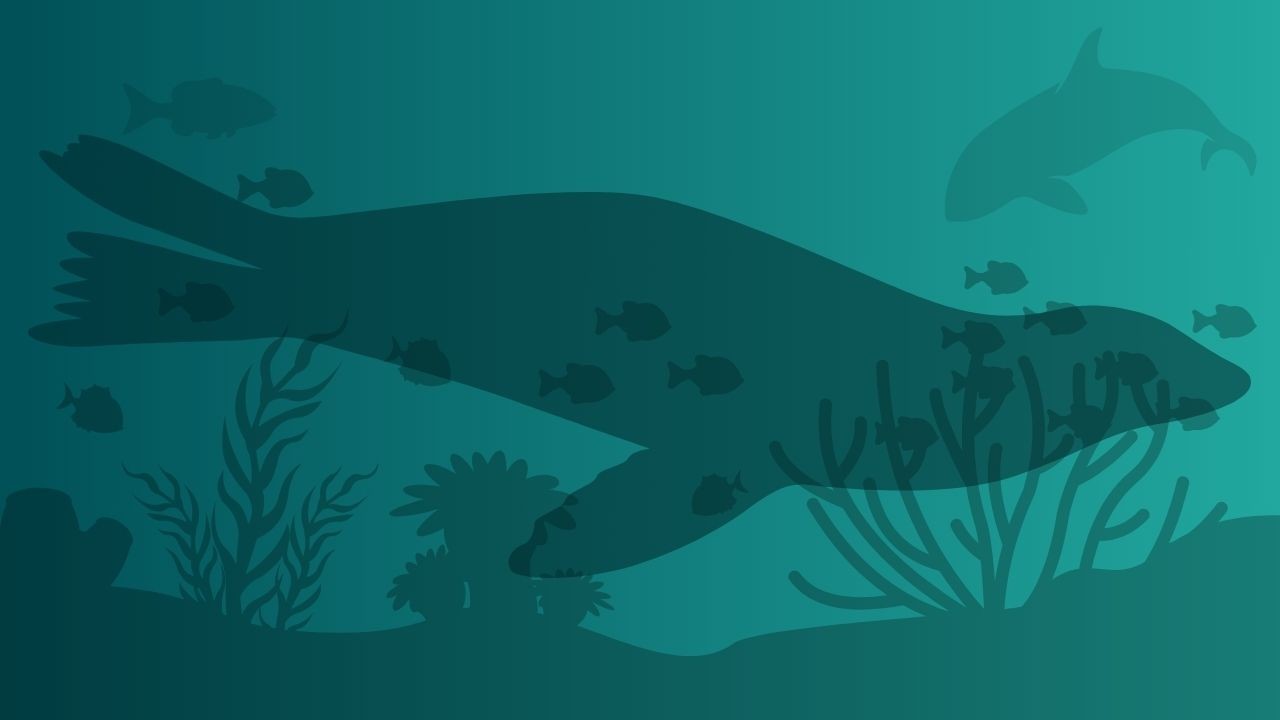
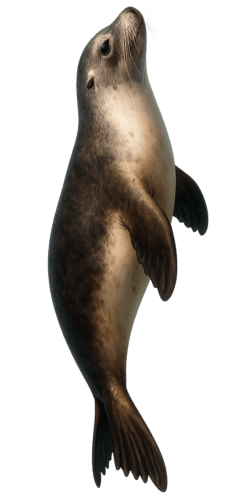
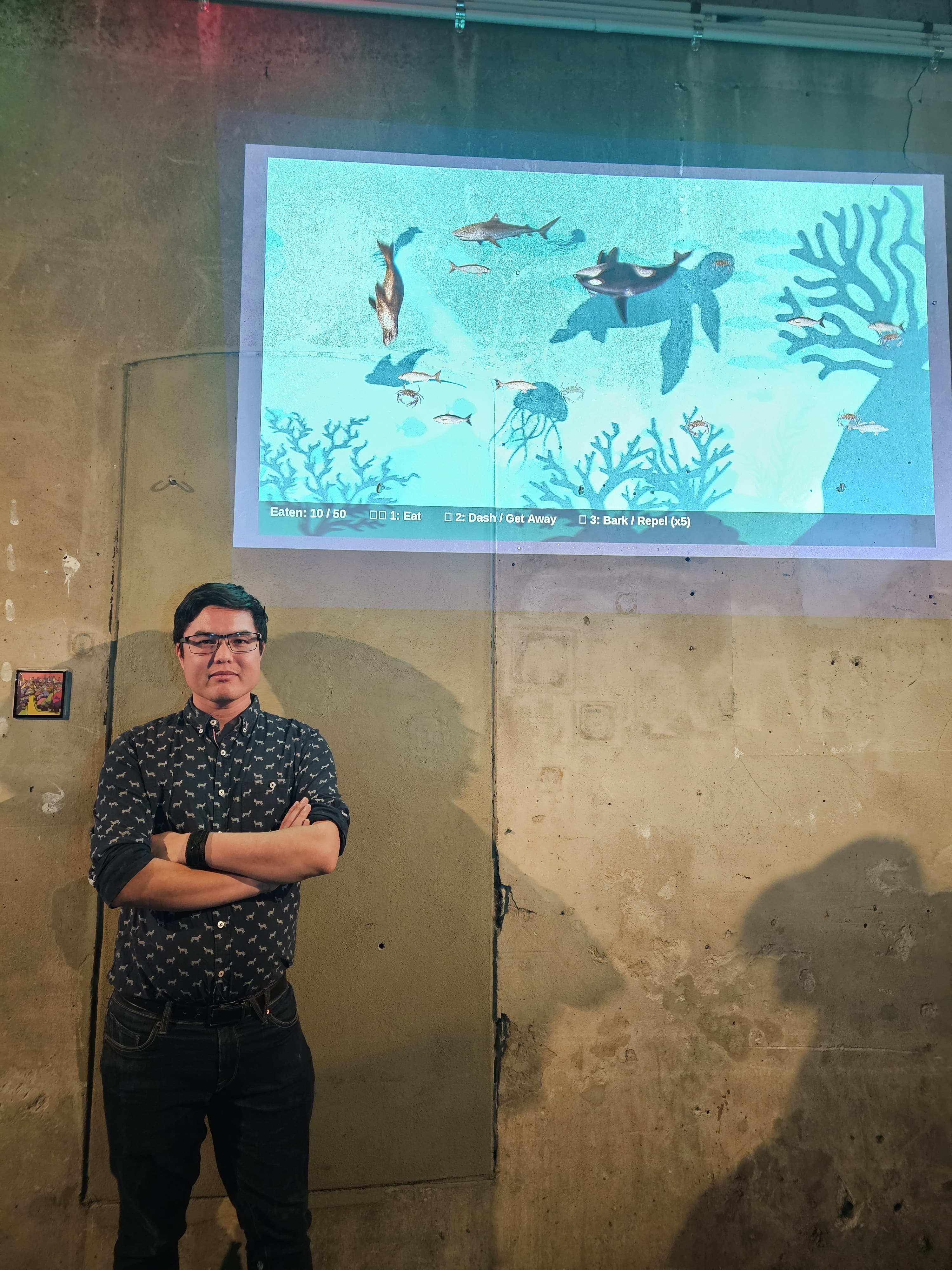
Aqualune is a fast paced underwater survival game built in p5.js and exhibited at Creative Coding @ The Lanes in 2025. Designed for an arcade cabinet, the game lets players control a seal as they hunt fish and crabs while avoiding orcas and tiger sharks. The goal was to create an experience that was immediately readable, engaging within seconds, and suited to short public play sessions.
Design and Development
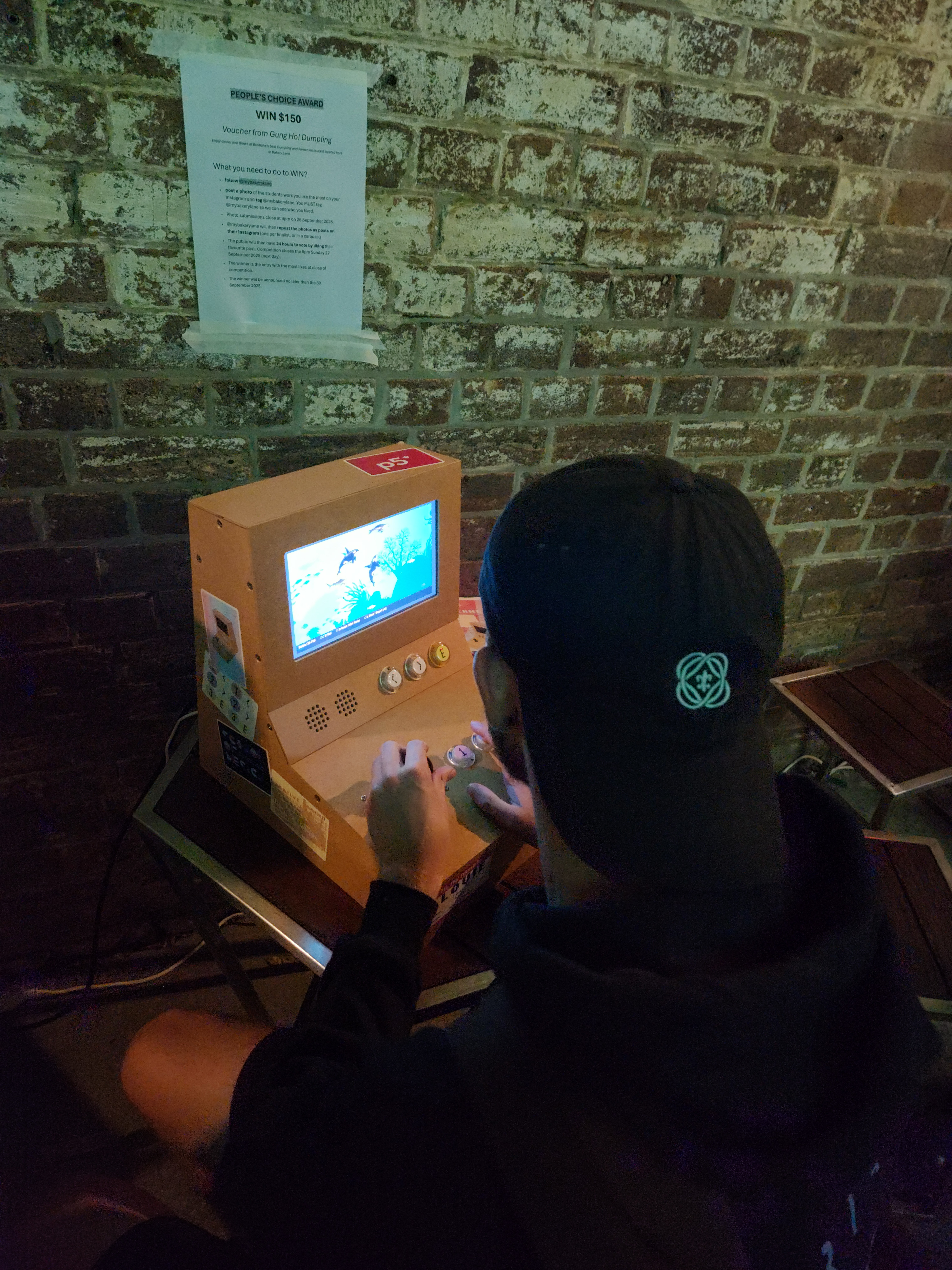
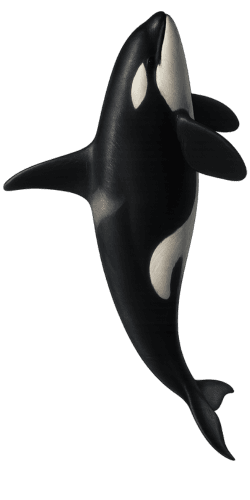
The concept began as an atmospheric exploration game inspired by classic arcade titles and Ecco the Dolphin, but shifted toward a score based survival loop to better suit the exhibition format. Development focused on clear silhouettes, quick feedback, and simple controls that felt responsive. AI generated sprites were refined for consistency, parallax backgrounds added depth, and iterative coding improved movement, predator behaviour, and pacing. Nearly a thousand lines of p5.js shaped an underwater world that balanced tension with flow.
Testing and Exhibition
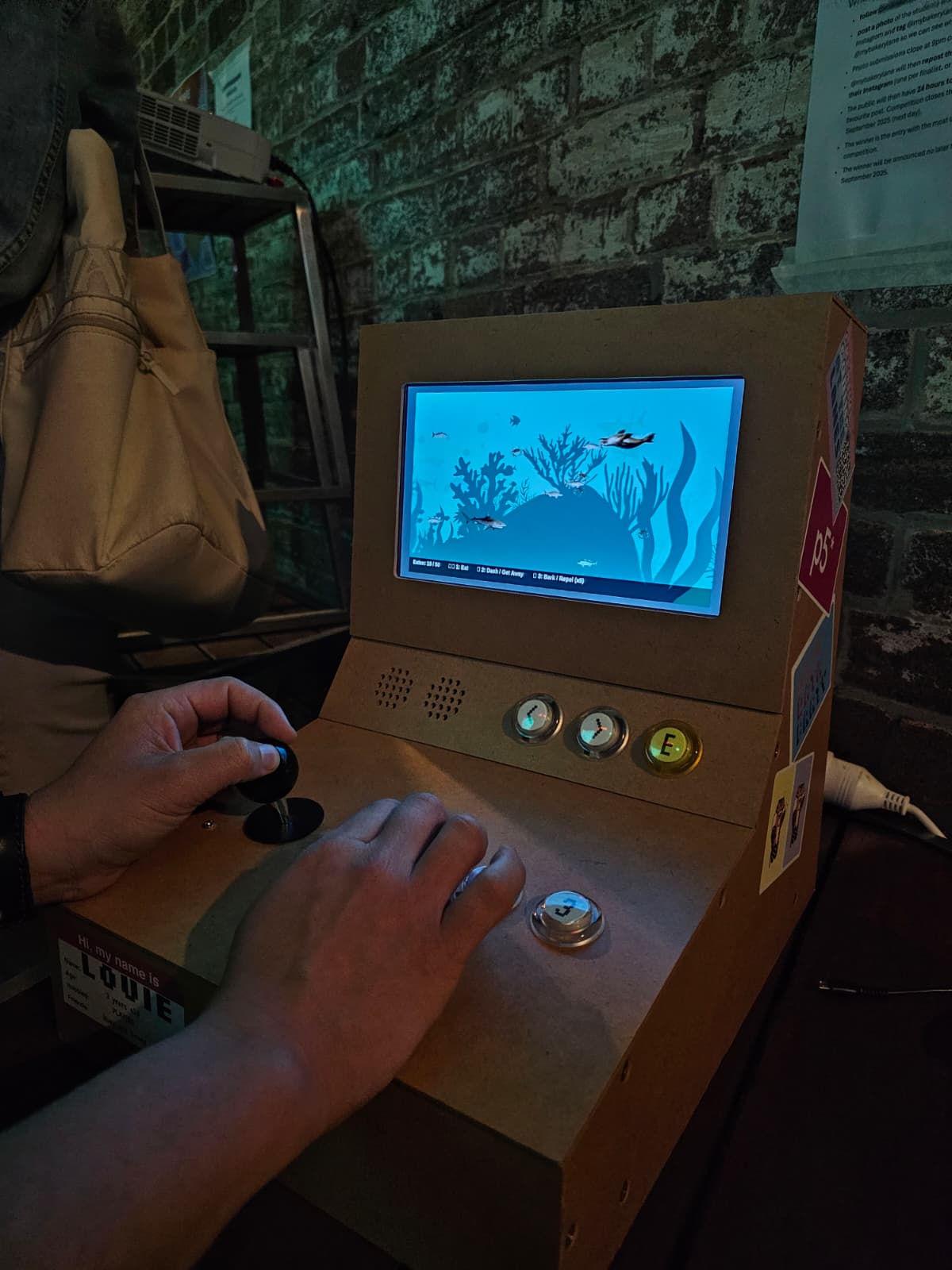
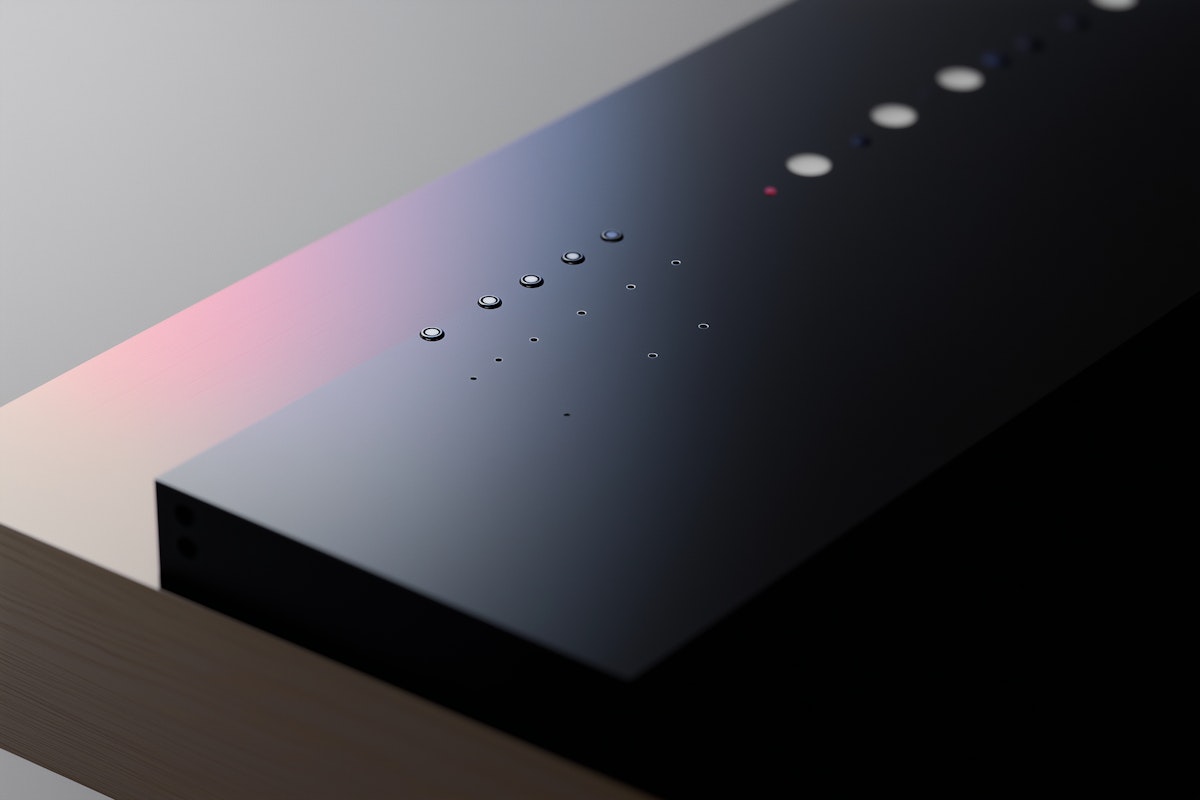
Playtesting with non gamers revealed early issues with clarity and difficulty. Improving the tutorial screens, HUD prompts, and predator speed made the game easier to understand within the first minute of play. At the exhibition, the arcade setup encouraged short, competitive sessions, with players gathering to watch and challenge each other. The cabinet, illuminated buttons, and quick onboarding helped the game hold attention in a busy public space.
Key Learnings
This project highlighted the importance of clarity, timing, and visual cues in interactive design. Iteration improved both gameplay readability and player experience, while technical work strengthened skills in p5.js, collision systems, and managing game states. Building Aqualune showed how simplicity, polish, and testing can transform a small prototype into an engaging public installation.
More Projects

UI / UX Design
Aqualune
An underwater themed arcade game created in p5.js for the Creative Coding showcase @ The Lanes.
Year :
2025
Industry :
Event / Festival
Client :
Creative Coding @ The Lanes
Project Duration :
6 weeks
Overview
Aqualune is a fast paced underwater survival game built in p5.js and exhibited at Creative Coding @ The Lanes in 2025. Designed for an arcade cabinet, the game lets players control a seal as they hunt fish and crabs while avoiding orcas and tiger sharks. The goal was to create an experience that was immediately readable, engaging within seconds, and suited to short public play sessions.
Design and Development
The concept began as an atmospheric exploration game inspired by classic arcade titles and Ecco the Dolphin, but shifted toward a score based survival loop to better suit the exhibition format. Development focused on clear silhouettes, quick feedback, and simple controls that felt responsive. AI generated sprites were refined for consistency, parallax backgrounds added depth, and iterative coding improved movement, predator behaviour, and pacing. Nearly a thousand lines of p5.js shaped an underwater world that balanced tension with flow.
Testing and Exhibition
Playtesting with non gamers revealed early issues with clarity and difficulty. Improving the tutorial screens, HUD prompts, and predator speed made the game easier to understand within the first minute of play. At the exhibition, the arcade setup encouraged short, competitive sessions, with players gathering to watch and challenge each other. The cabinet, illuminated buttons, and quick onboarding helped the game hold attention in a busy public space.
Key Learnings
This project highlighted the importance of clarity, timing, and visual cues in interactive design. Iteration improved both gameplay readability and player experience, while technical work strengthened skills in p5.js, collision systems, and managing game states. Building Aqualune showed how simplicity, polish, and testing can transform a small prototype into an engaging public installation.
More Projects
UI / UX Design
Aqualune
An underwater themed arcade game created in p5.js for the Creative Coding showcase @ The Lanes.
Year :
2025
Industry :
Event / Festival
Client :
Creative Coding @ The Lanes
Project Duration :
6 weeks
Overview
Aqualune is a fast paced underwater survival game built in p5.js and exhibited at Creative Coding @ The Lanes in 2025. Designed for an arcade cabinet, the game lets players control a seal as they hunt fish and crabs while avoiding orcas and tiger sharks. The goal was to create an experience that was immediately readable, engaging within seconds, and suited to short public play sessions.
Design and Development
The concept began as an atmospheric exploration game inspired by classic arcade titles and Ecco the Dolphin, but shifted toward a score based survival loop to better suit the exhibition format. Development focused on clear silhouettes, quick feedback, and simple controls that felt responsive. AI generated sprites were refined for consistency, parallax backgrounds added depth, and iterative coding improved movement, predator behaviour, and pacing. Nearly a thousand lines of p5.js shaped an underwater world that balanced tension with flow.
Testing and Exhibition
Playtesting with non gamers revealed early issues with clarity and difficulty. Improving the tutorial screens, HUD prompts, and predator speed made the game easier to understand within the first minute of play. At the exhibition, the arcade setup encouraged short, competitive sessions, with players gathering to watch and challenge each other. The cabinet, illuminated buttons, and quick onboarding helped the game hold attention in a busy public space.
Key Learnings
This project highlighted the importance of clarity, timing, and visual cues in interactive design. Iteration improved both gameplay readability and player experience, while technical work strengthened skills in p5.js, collision systems, and managing game states. Building Aqualune showed how simplicity, polish, and testing can transform a small prototype into an engaging public installation.